skip to main |
skip to sidebar
Despite what hear, SEO is not dead. In fact, finding a good SEO coach can help you optimize your website and drive tons of qualified traffic to your website to purchase products and services you offer.
SEO Coaching
As someone who's been in the search engine optimization field for over a decade, I can honestly say there are two types of people. The first group is comprised of those who want number one rankings but don't want to do the work themselves. The second group are the do-it-yourself'ers. The reality is that both groups need to have a fundamental understanding of organic search if they want to be successful.
SEO coaching is a great way to start. The benefit of using and SEO coach is that simply the efficiency by which they can help you achive your goal. When you start with an SEO program or book such as SEO Made Simple, you'll acquire the fundamentals but they won't be customized to your specific website history and situation.
That's why having someone who can understand where you are on the organic evolutionary chain can save you time and money. Just because you want to achieve an online, don't be fooled into thinking you have to start from scratch.
What Will Your Coach Do?
A good SEO coach will begin by understanding your current situation and doing a technical crawl on your website. SEO's have tools they can use to evaluate your site and pinpoint areas that are deficient. With the proper keyword research and technical analysis, you learn about your website's strengths and weaknesses. Both of these factors are essential for achieving your online goals.
Often times a technical crawl is all you need to get started. Sites, no matter how bad they are, have some qualities that are worth leveraging and others that need to be brought into compliance with the current Google algorithm changes. Begin your optimization process here and you will see gradual improvements in organic traffic.
Where to Find Your Organic Ranking Coach
There are plenty of people out there who claim to be SEO experts. Make sure to ask your potential coach about his specific experience - what sites he's worked on, the company's he has helped, and also, ask him to validate his authority (articles, interviews, books, etc.). You obviously want to make sure you're getting good advice.
When I coach others, I like to charge by the hour and work with clients to direct the sessions. Said another way, it's important to work with my clients in a way that allows them to set the agenda while being directed towards a specific outcome. My goal is to teach people to, "learn to fish" organically. Good SEO coached do that. They want clients to be able to recognized good SEO from bad SEO on their own.
If you're looking for someone to mentor you in the search engine optimization space, then be mindful of your goals and expectations. Find someone who you can learn from and acquire all the resources necessary for top organic rankings.
When people think about search engine optimization (SEO), they can't help but do a quick Google search for information that can help improve organic rankings. When looking online for SEO resources, you'll likely find conflicting information - this is why it's so helpful to use a simple guide that only shares the best practices for improving website rankings.
SEO Made Simple 5th EditionThere's lots of information available online on SEO best practices. However, information related to the organic search changes regularly as Google improves their ranking algorithm. As such, the best place to find the latest and most accurate information is by follow leading SEOs who work across numerous websites and industries - specifically within the SEO field. This ensures access to the most effective strategies from those getting real-world results.
In this book, SEO Made Simple (5th Edition), you'll discover the latest information on optimizing your website for improved organic rankings. It's designed to cut through the clutter and misinformation that can be difficult to navigate. The book has been recently updated to educate those interested in search engine optimization in both the standard optimization techniques required to get them most from your website as well as advanced techniques to further enhance organic results.
There are a number of topics that have been updated to further enhance SEO results for your website. An updated section on developing an authoritative link profile is worth 10x the book's value as it shows how you can easily attract quality links to your site. This improves website authority and organic rankings.
The second area that has been significantly update is the information on local and mobile search which is now driving more than half of all search engine traffic. If you are a business owner or trying to promote your business online, this is critical to the success of your organic marketing.
People who purchase SEO Made Simple 5th Edition will be impressed with the level of detail and simplicity related to learning and implementing effective search engine optimization strategies. The book has been updated for 2016, reflecting this year's changes as well as pre-planning for upcoming changes announced for next year.
Pros:
--SEO Made Simple (5th edition) has been updated with the latest techniques for proper search engine optimization.--The book has been updated to include information on local and mobile search.--Strategies included have been proven effective across thousands of websites.--Top selling book in the category, more than 30,000 sold.--Techniques are presented in a very simple format, ideal for beginners and intermediate SEOs who want to improve organic rankings.--Additional resources are included with the book at no additional cost.
Cons: --None to mention
Get started today optimizing your website, blog, and other digital assets. Join the tens of thousands of individuals enjoying more organic traffic thanks to the powerful strategies revealed in this top-selling SEO guide. SEO Made Simple 5th Edition is the best SEO book available today.
Some days, you have an epiphany, that moment when the light bulb goes on and you experience a moment of SEO euphoria. Sunday was that day! I realized that all I needed to do for improving the ranking of a recent interview was to share a link on an authoritative site - The Marketing Blog.
Ty Cohen Interview
For those of you who haven't heard of Ty Cohen, he is one of today's leading online marketers. I met Ty a couple of years ago through a mutual friend and have followed him ever since. He is the author and publisher of Kindle Cash Flow and other popular products and inspiration to many of us looking to achieve multiple revenue streams and the Internet lifestyle.
I was fortunate enough to conduct a Ty Cohen Interview a few months ago and had been working on optimizing the interview for top rankings. Instead of focusing on the keyword "Ty Cohen", I decided to focus on "Ty Cohen Interview". This is because sites like YouTube and others already have the top placement for this entrepreneur.
In an effort to get the top spot on search results, I decided to leverage social media in addition to on page optimization techniques. We all know that organic results take time so I gave myself a few weeks of making social media posts to see if I could get a particular web page to the top of search engine results.
In just a few short weeks, I was able to move this page to the number 3 position on Google. At that point, I decided to give it a slightly bigger boost with some inbound links for high profile sites where I could make updates or direct links. Boom, the ranking went to #2.
SEO is about Quality Links, Social Media and More...
On Sunday I was doing a little work on my next update to the top-selling book, SEO Made Simple, and had an epiphany - generate more quality links to the page I'm trying to optimize using my own resources. Whether you know it or not, you have a number of high quality websites at your disposal. Whether you have a blog like this one here or a profile on Facebook, there are a number of digital assets at your disposal you can use to give your rankings a boost. Think about all of the places where you can control information being distributed online and determine how best to use them for improving link authority and website rankings.
For now, I'm glad I realized there are things in my control easily leveraged for top rankings when I need them most.
As digital marketing becomes more complex, the more difficult it becomes for businesses tomanage an effective budget. Spreading resources across every avenue of the industry is a difficult task, and it can lead to key areas being neglected.
Why is it important to get campaigns right? In 2014 marketing budgets went up by 10% - by 2016 it’s expected to make up 35% of the average businesses’ budget. Maximizing your strategy for strong ROI is now all important, and understanding how to get a shrewd plan together should be at the center of any business plan.
In this 8 point guide the vital tactics which can make a campaign work are explained. It’s an insight on how to spread a digital marketing budget across the right areas, ensuring the best chance of excellent ROI.
1. Get A Plan In Order
Many businesses (particularly start-ups) have a habit of launching into digital marketing campaigns without a thorough plan. The idea of winging it and expecting good results can betempting, but the fact is it is essential you work out what your objectives are.
Promoting brand awareness and increasing conversion rates tend to be the key goals, but how do you intend to achieve this? Can it be managed on a long term scale? Who are you going to employ to make it happen?
The questions can pile up, and there’s also the need to manage a budget between the likes of social media, PPC, and SEO. Knowing where your business needs to focus is the essence of a strong digital marketing plan, which means you need to understand your audience.
2. Research Your Industry
One of the forgotten factors is not all businesses can work with SEO and PPC. Not everyone is always looking for the keywords you may want to rank for, meaning there is no point in funding a SEO campaign. Conversely, a PPC strategy won’t work if you have low margins –all this tends to do is lose you money.
The solution to this is to understand your audience and get to know what your competitors are doing. Examine the market and your position in it – how authoritative do you genuinely see yourself? If you’re entering an established and competitive market, for example, then PPC is a great way to learn which keywords to focus on. In turn, this can shape your SEO efforts.
3. Get Your SEO Structured
Capturing key SERPs is what SEO is all about. SEO is more sustainable than PPC, the problem is the results take quite a while to show, and you run the risk of facing a Google penalty if you get it badly wrong (such as with Black Hat SEO – steer well clear of it).
For start-up businesses Google uses a cautious tactic to wait and see how the new site develops. Many new businesses can fold and the site is essentially abandoned – if this isn’t your plan, get on with SEO before your launch: ensure your site is streamlined on a technical front, is mobile-friendly, and structure excellent on-site content.
Off-site work is also vital – with online buzz around your business, the signals sent to Google will be positive and will assist your ranking. In the meantime, PPC can generate interest in your site whilst Google’s algorithms crawls your site and organic traffic builds up.
4. PPC Will Always Back You Up
PPC is a safety net of sorts as it can be used to drive relevant traffic to your site. In moments of marketing uncertainty, turn to PPC – even a budget of $1,000 based around broad keywords can have significant results.
This tactic can help you understand top-performing keywords and popular new ones (again, which comes in useful for SEO activities). However, do be aware if you’re a B2B company as competition is rife and prices can be extremely high. Respect your budget and see what you can achieve with it.
5. Take A Look Into PPC For Mobile
With Google’s mobile algorithms now in place (benefiting sites with mobile-friendly sites), now is the time to capitalize on mobile marketing features. For mobile PPC, there are brilliant CTA options which come in particularly useful for lead generation.
6. Use The Power Of Remarketing
Setting aside budget for remarketing is another essential tactic which, when deployed properly, can deliver great results. Your marketing efforts can’t always win over your audience, as many will visit your site, show some interest, but then leave.
Remarketing is an unobtrusive way to get back into their field of vision – setting up tracking codes can ensure they return to your site with subtle imagery and clever wording.
7. Take To Content Marketing With A Flourish
Having good content is now more important than ever. Google’s algorithms will notice poor copy and send the site plummeting down SERPs - sculpting quality content through a White Hat SEO campaign can build a strong link catalog, boost your authority, and have a steady stream of CTA driven social media output going.
8. Recognize Key Social Media Tools
Most businesses are on Facebook and Twitter – this is a given. However, many brands don’t put the effort in to taking advantage of other formats, such as Pinterest, LinkedIn, Instagram, YouTube, and even the likes of FourSquare.
YouTube, as an arbitrary example, offers an advertising format where companies can tap into utterly vast audiences. It remains largely underused by brands, so try setting aside some budget to get in front of a site which has a hundreds of millions of views a day. With its localized options and specific targeting services, you can effortlessly focus in on your demographic.
Use This Handy 8 Point Guide To Keep Everything On Track
Now we’ve highlighted the areas to focus on, it’s time to take action and make sure your budget is spread over the most crucial areas of digital marketing. To get things moving you can:
1. Identify if your business is better suited to SEO or PPC – if both, set aside your budget appropriately. 2. Setup a PPC campaign to identify keywords which and relevant to you and, importantly, convert.3. Take the data from this to develop your on-site SEO efforts.4. Set aside budget for off-site SEO/5. Begin a major PPC campaign to attract your target consumers.6. Monitor your progress in Google’s SERPs – perhaps subscribe to Moz to have detailed results of your search rankings. You can adjust your PPC expenditure based on the results, and focus your efforts on SEO areas which need work.7. Put in place a remarketing campaign which will boost your conversions. 8. Don’t forget about your mobile opportunities – accommodate your budget towards appealing to this vast audience.
The award winning Soap Media is a digital marketing specialist from the UK. It has been delivering quality results since 2005.
As a marketer, I'm approached on a regular basis to review books, products, and ideas from some well know entrepreneurs as well as young adults hoping to make a change in a particular niche or industry. Unfortunately, finding a real gem can be far and few between. The good news is that every so often, I do find something that changes the game, elevates my own thinking, and is literally too good to share.
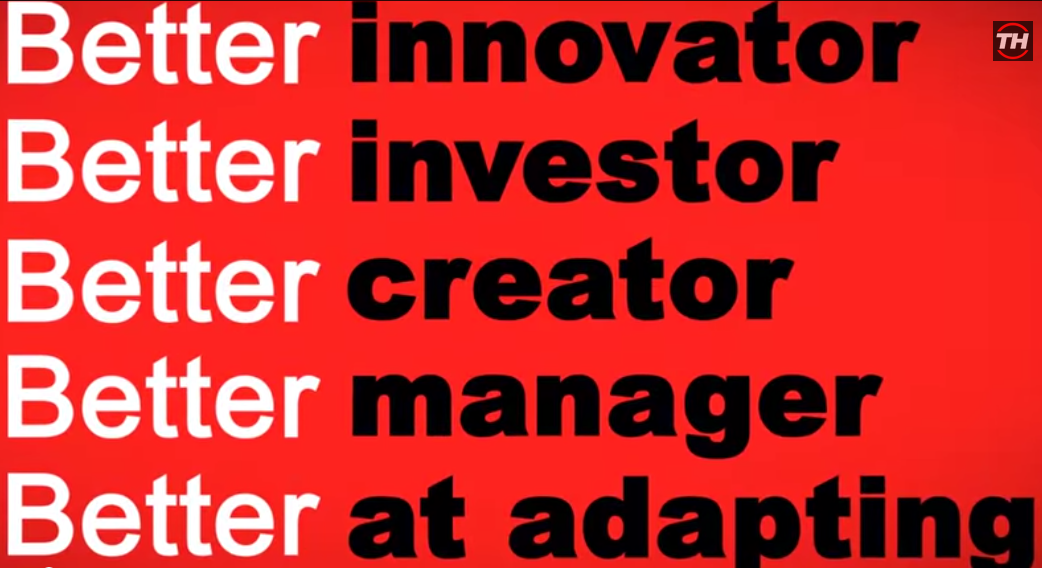
Better and Faster by Jeremy Gutsche is the latest find that I couldn't put down. Jeremy is the CEO of Trendhunter.com and an amazing entrepreneur and author. This book explores the genesis of creative ideas - the best creative ideas, and provides insight into how they happen. The best part is that by reading this guide, it can make YOU better in the area of discovery, innovating faster and better, and recognizing your full potential.
The book explores neurological traps that are holding you back. As I've always said, "Change your thinking change your life!" It also reveals a number of ways to innovate more quickly which you've likely never considered. Jeremy calls his six patters of opportunity: convergence, divergence, cyclicality, redirection, reduction, and acceleration.
These finding are based on real data. In fact, they studied more than 250,000 ideas through the trendhunter.com audience of more than 100,000,000 individuals to discover what causes opportunity. Wouldn't you like to know where to find true opportunity and how to use it for personal and professional development? Of course you would. That's why this book is such a valuable resource. It's also why more than 300 brands rely on Jeremy's method to accelerate innovation.
I strongly encourage you to "be in the know". Connect with Jeremy and start innovating. Jeremy has offered readers of the Marketing Blog exclusive access to content which you can find by clicking here. Enjoy the content and be sure to pick up Jeremy Gutsche's book on Amazon. It's content you can't innovate without.
In theory, marketingis about the science that builds brands, but in practice, it is often something simpler—getting the packaging right. In a grocery store, a customer is unlikely to be aware of a company’s latest promotional events, but he or she will be acutely aware if the company’s product appears to be attractive and affordable as it sits on the shelf.
Sometimes marketing is more about humble common sense than exciting theories about emerging trends. Consumer interests are often stirred by simple questions.
Describing A ProductSeth Godin once described marketing as “a contest for people’s attention.” Good packaging can make it easier to win that contest.
The questions consumers have about the value of a product on a shelf can often be answered by the package the product is in.
Packaging is much more than putting products in the right-size box and sticking on a label. Packaging should not be underestimated. Sometimes good packaging may be responsible for millions of dollars in sales figures. You can get entrepreneurial and creative even in your use of cardboard boxes. In fact, it would be quite easy to develop a full semester’s worth of information about the best practices around highly-attractive packaging.
3 Common Features
Here are the common features behind good packaging.
1. The package protects the product. Before the product reaches the consumer, it passes through many hands and stops at many destinations as it travels by air, sea, or land to get to the store or the customer’s mailbox. Damaged products will not result in repeat business or referrals.
2. It should make a good impression. For instance, through the careful use of shapes, colors, images, and copy an ordinary box of crayons can fill a child with instant delight at the possibilities of art. Packaging has the power to excite the needs, interests, and desires of the buyer.
3. It should differentiate itself from products provided by competitors.It makes a difference to the consumer if their package comes in a plain cardboard box or one with a few design elements. For some products, plain boxes without printing will suffice—for example, it is a waste of money to have a colorful box for computer printing paper because customers are unlikely to get excited about reams of paper. For others, packaging is very important. For instance, in MLM shipments, consumers always look forward to their monthly shipment of health care products.
An Art and ScienceRemember the words of SethGodin: marketing is “a contest for people’s attention.” Good packaging can make it easier to win that contest. In some ways, packaging is a science. Packages have to have the right blend of size, strength, and weight for product protection and reduced storage and distribution costs. Manufacturers are also able to offer direct printing and a choice of one color, two colors, or lots of colors. In other ways, packaging is a science. A box of cereals, for example, in an attractive design will outsell another brand of cereals on the shelf right next to it many times better even if the contents are similar.
In theory, “swag” is a great way to get a brand or company out there. Receiving anything for free often leaves a memorable impression on consumers, regardless of whether the swag is in the form of a pen, t-shirt or memorable token.
Marketing tactics lose their influence over time though. People get used to ignoring radio ads, billboards just become part of the blurry scenery, and Internet banner ads become something we avoid clicking. So is swag still a valid marketing tactic?
Just like social media, it depends on your audience. But overall, recent marketing tactics involving swag still make a big splash with consumers. Companies just have to use it in new remarkable ways.
Bookmarks Instead of Business Cards
Everyone has business cards, so how is your’s going to stand out? Get creative! A substitute in the form of a bookmark actually has a purpose beyond sitting in someone’s wallet. Big enough to cram whatever contact information you need, a bookmark contact card will also remind people of you and your business every time they open and close the book they are reading.
Stylish T-Shirts
T-shirts can be one of the most effective forms of swag, since people wear them around town and essentially become a low-cost source of effective advertising for a brand. T-shirts are certainly one of the costlier swag items to produce, though, so it’s important to use a genuinely good design.
I’ve received t-shirt swag for a variety of reasons from purchasing products as a bonus, similar to what National Abrasives offers, to getting a well-designed t-shirt from Short Stack for talking about their brand in one of my previous articles.
People may accept a free t-shirt, but they won’t wear it if it’s dull or ugly. Avoid basic white tees and go for something more visually appealing, with a relative fashion sense, instead; it’ll be costly, but worth it if designed properly.
Digital Content
Offering free “digital swag” - in the form of things like a free wallpaper, app, eBook, or digital coupon - usually costs little to nothing to produce, yet can still prove beneficial in exposing your brand. Offer digital swag via social media to increase your following on there, as well. Social media followers and free content often results in higher engagement.
The most important part of digital swag is it must offer real value to your consumer. Digital swag is an excellent investment because of its low cost production and high return on investment. Since it’s online, loyal customers and fanatic fans can share your swag and do the work of distribution for you.
Think Outside of Swag
Giving swag isn’t the only option. Take a lesson from the startup Medallia who at this year’s SXSW made a big brand impact by collecting everyone’s swag for the homeless. It was a unique idea that got a lot of media attention for the new company while also doing something good for those in need.
Care Packages
If you want to go all-out, create care packages with consumers’ well-being in mind. A small, brand-laden bag with items like a small water bottle, aspirin, and apple inside will be perceived as a healthy and welcome surprise by consumers, perhaps even elevating their mood. Care package swag may be time-consuming to create, but it will certainly make for a striking impression among consumers.
Swag certainly still works for businesses and brands as a great means of exposure. They can be effectively implemented into most business plans, as long as the swag is creative, interesting and fresh, as the five aforementioned examples are.
Special thanks to Ali Lawrence for today's post. Ali Lawrence is a content specialist for a web design company and blogs in her free time at MarCom Land. Her articles have been published by Hot in Social Media, Yahoo! Small Business, and Business2Community.

 As someone who's been in the search engine optimization field for over a decade, I can honestly say there are two types of people. The first group is comprised of those who want number one rankings but don't want to do the work themselves. The second group are the do-it-yourself'ers. The reality is that both groups need to have a fundamental understanding of organic search if they want to be successful.